Experiments in Black and White

Got my new Canon Rebel SL3! Hope to write more about that later, but suffice to say it’s pretty great. I know, i know, it’s a very low-end, entry-level DSLR. But, it’s a fabulous upgrade to my ancient Canon Rebel T3. I took it out last night with the ISO cranked up higher than I could previously reach and took some shots in the very dark night. The color is pretty useless without light and noise above ISO 6400, so I took the RAW files and experimented with conversion to B&W. I think the results are intriguing, but like everything I need more practice.

Spring in January

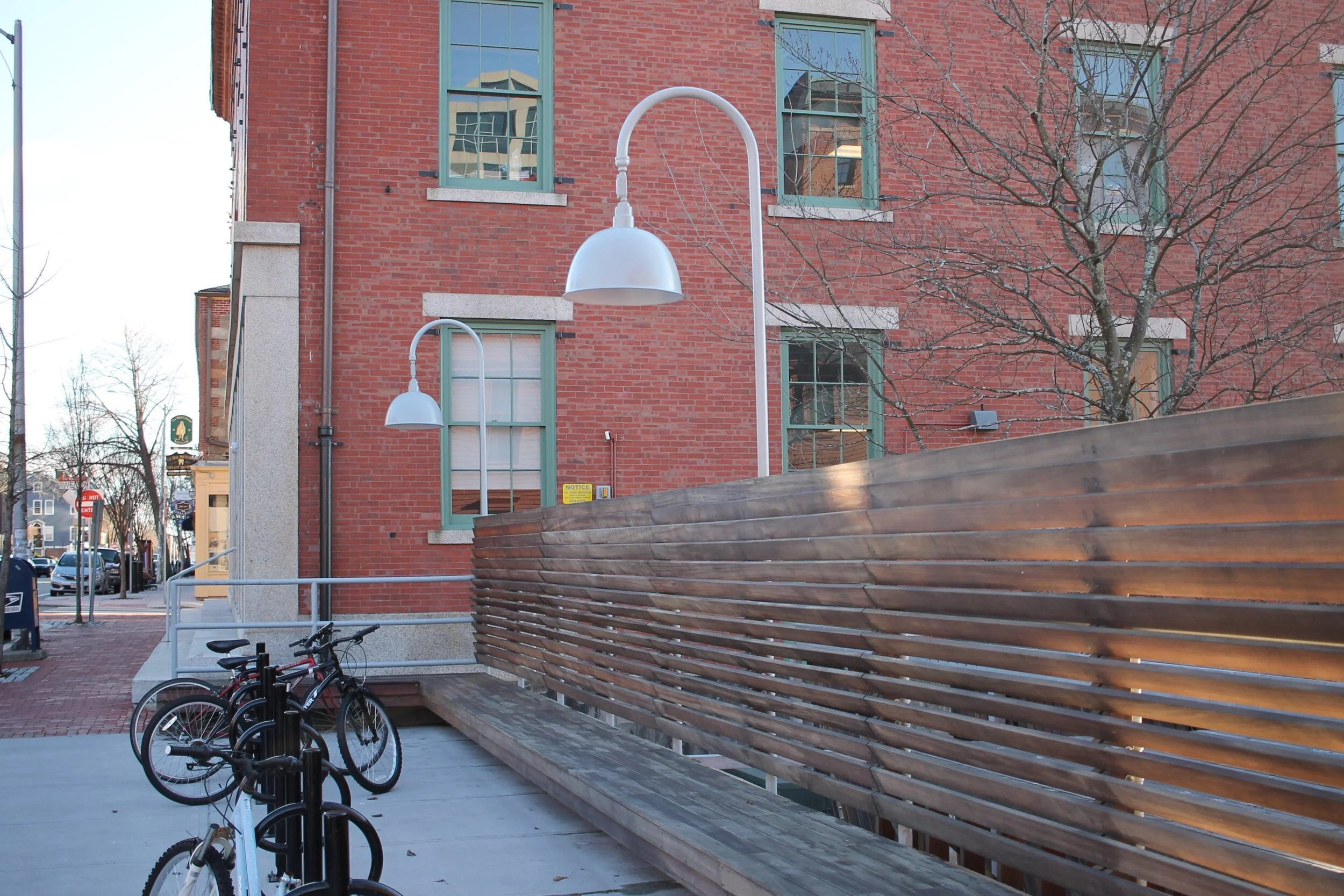
The temperature in Rhode Island today was an uncharacteristic 65°, which is depressing environmentally but lovely in the moment. I took the opportunity to snap some photos at the shore near my house and grab a few interesting shots of different textures along the walk. The sun hung low around 3:30p, casting a gorgeous warm hue. A couple of these shots captured the light nicely.

Shopping for a new camera

Ok, I don’t need a new camera. But after a couple of weeks exploring photography as a hobby I am obsessing a bit over new gear. This isn’t shocking. Obsessing over new gear is a hobby in itself, and one that I’ve enjoyed for many years. The research rabbit hole is a pretty fun pastime and I generally learn a bit along the way.

DSLR vs Mirrorless

This seems to be the big debate, or maybe it was a couple years back. Mirrorless gets all the buzz these days. The reduced size and weight is a great convenience, but I’m open to the idea of getting another DSLR and enjoying longer battery life and startup speed. So, I could go either way.

My current camera is an old, entry level Canon Rebel T3. I have a couple of prime lenses as well as the kit zoom lens. Not a huge investment in lenses, but several hundred bucks of glass with EF/EF-S mounts.

Nominees

There are great options from Sony, Fuji, Nikon, and Canon. But I narrowed down to Canon and Fuji. I’m familiar with Canon, and like both the features and styling of the Fuji. This is merely a hobby for me, and I can’t get too carried away with expensive toys. A couple of ground rules:

  • Ideally less than $1k
  • At least one prime lens, starting with a wide-angle
  • Mic input for possible video work

Canon M50

A mid-range mirrorless cropped-sensor camera from Canon that gets a lotta love on YouTube. It uses Canon’s anemic selection of EF-M series lenses, but there’s an adapter which can be cheaply bundled with the body to use the large catalog of EF/EF-S lenses.

Positives

  • Roughly $600 for the body, kit zoom, and EF lens adapter
  • Though there are few EF-M options, the couple that exist are good and cheap. The EF-M 22mm f/2 STM is $200 and would probably be my first purchase if I buy a native lens. However, with the adapter I can get started with my existing EF-S lenses.
  • Good sensor
  • Digic 8 processor which
  • Excellent auto-focus
  • Fully articulated screen
  • Mic input
  • Touch-screen focus that can be used either with the viewfinder or rear display
  • In-body time-lapse

    Negatives

  • Dismal battery life, so need to buy some spare batteries
  • Micro-USB for data transfer only. No in-camera charging, no powering from commodity USB power banks.
  • Poor 4k video support (cropped, poor auto-focus in 4k)
  • No eye-detect auto-focus in 4k video

Canon SL3

Light and compact entry-level DSLR that uses EF or EF-S lenses. Though DSLR’s aren’t hip, this camera has a lot of appeal to me as a good value.

Positives

  • Body costs $500, which is the same as the M50 but unlike the M50, I won’t need to purchase any lenses
  • Loads of EF & EF-S lenses, some great bargains
  • Same sensor, processor, and screen of the M50
  • Excellent battery life (an advantage of the DSLR) when shooting through the optical viewfinder
  • Better battery life when shooting in live mode than the M50
  • Seems to have most of the mirrorless features when shooting in live mode with the rear screen
  • Has eye-detect focus when using the live mode with the rear screen
  • Mic input
  • Clean HDMI out, though I don’t imagine I’ll livestream (lol)

    Negatives

  • Larger than mirrorless (though it can be a positive too, as the ergonomics tend to be better)
  • Same poor 4k video support as the M50
  • Inexplicably lacks 24fps 1080 video
  • Micro-USB for data transfer only. No in-camera charging, no powering from commodity USB power banks.

Fuji X-T30

Fuji’s little brother to the X-T3 looks like a phenomenal offering. This is definitely a step up from the other two Canon cameras I’m considering. I love the retro-styling of the camera and the abundance of manual knobs and buttons.

Positives

  • Great manual controls for aperture, shutter, and ISO speed.
  • Joystick focus control
  • Very slow shutter speeds for long-exposure photography
  • Large selection of cropped-sensor lenses (though they are pretty pricey)
  • Excellent sensor and processor
  • Better low-light performance than the Canon sensors from most reviewers
  • Useful film simulation modes
  • USB-C for data-transfer, charging, and continuous power
  • 4k video without a crop (10-minute limit)
  • Customizable buttons and dials
  • 120fps slow-motion video

    Negatives

  • Price. The body costs $900 and with a kit lens it jumps to $1300
  • Ergonomics seem poorer with the dainty grip and some awkward button placements
  • The screen can tilt up and down a bit, but not fully articulated
  • 2.5mm mic input requires a 3.5mm adapter
  • 10-minute limit on 4k video

Leanings

Though I’d love to grab the Fuji X-T30, after thinking on this for a couple of weeks I’m hesitant to spend the money. The Canon SL3 feels like the most responsible choice as it will be a noticeable upgrade from my Canon Rebel T3, preserves my investment in lenses, has great battery life, and is the cheapest option.

Night photos

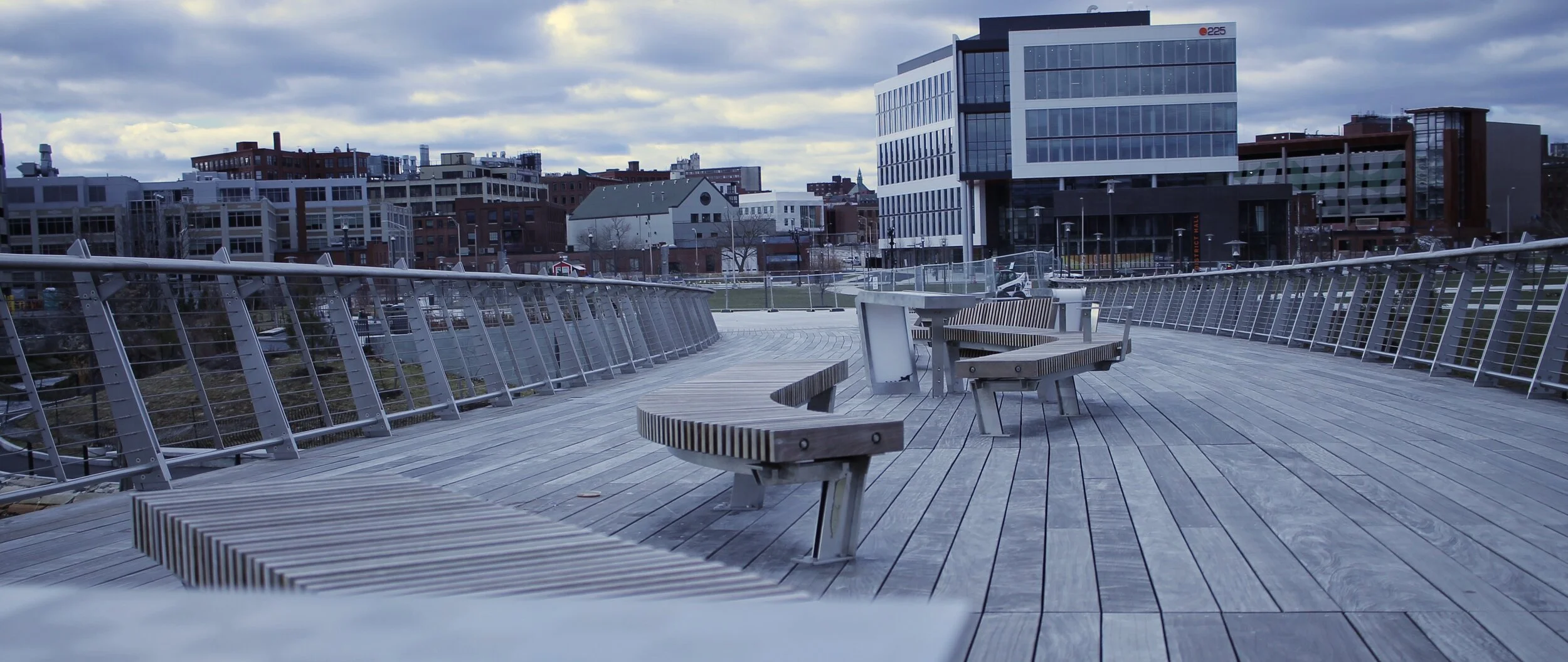
Snapping photos is becoming a fun little hobby. I never know how long I will be inspired by an urge, so for the past week I’ve been trying to capitalize on my reinvigorated interest in cameras and photography to get out and take pictures. Watching too many YouTube camera reviews, I got interested in trying some long-exposure photos. On Wednesday night I bundled up and walked half a mile to the bridge near my house to try the technique. A few nights prior I tried an initial experiment, but both the lack of a tripod and my inability to focus through the optical viewfinder resulted in blurred images. I brought my recently purchased inexpensive tripod from Amazon to steady the camera and studied how to focus in manual mode with the rear display in 10x zoom (auto-focus is useless on my camera in the dark). Even better equipped, I only managed to salvage a few shots, but I’m pleased with the first effort. These were all shot with the EF 24mm/2.8, though I’d like to try again with the 50mm/2.0.

Dusting off a Canon Rebel T3

During the holiday break (more on that later), I spent an afternoon browsing through old Christmas photos. As I dug through the digital pile, three distinct eras emerged, marked by the quality of the shots.

  1. Good shots with point-and-shoot cameras (either Olympus or Canon depending on the year)

  2. Great shots with my first, and only, DSLR: a Canon Rebel T3.

  3. Smartphone pics ranging from poor to middling quality. My current iPhone 11 takes darned nice pics, but not comparable to the ones snapped with the big sensor & big glass in my entry-level, ancient DSLR.

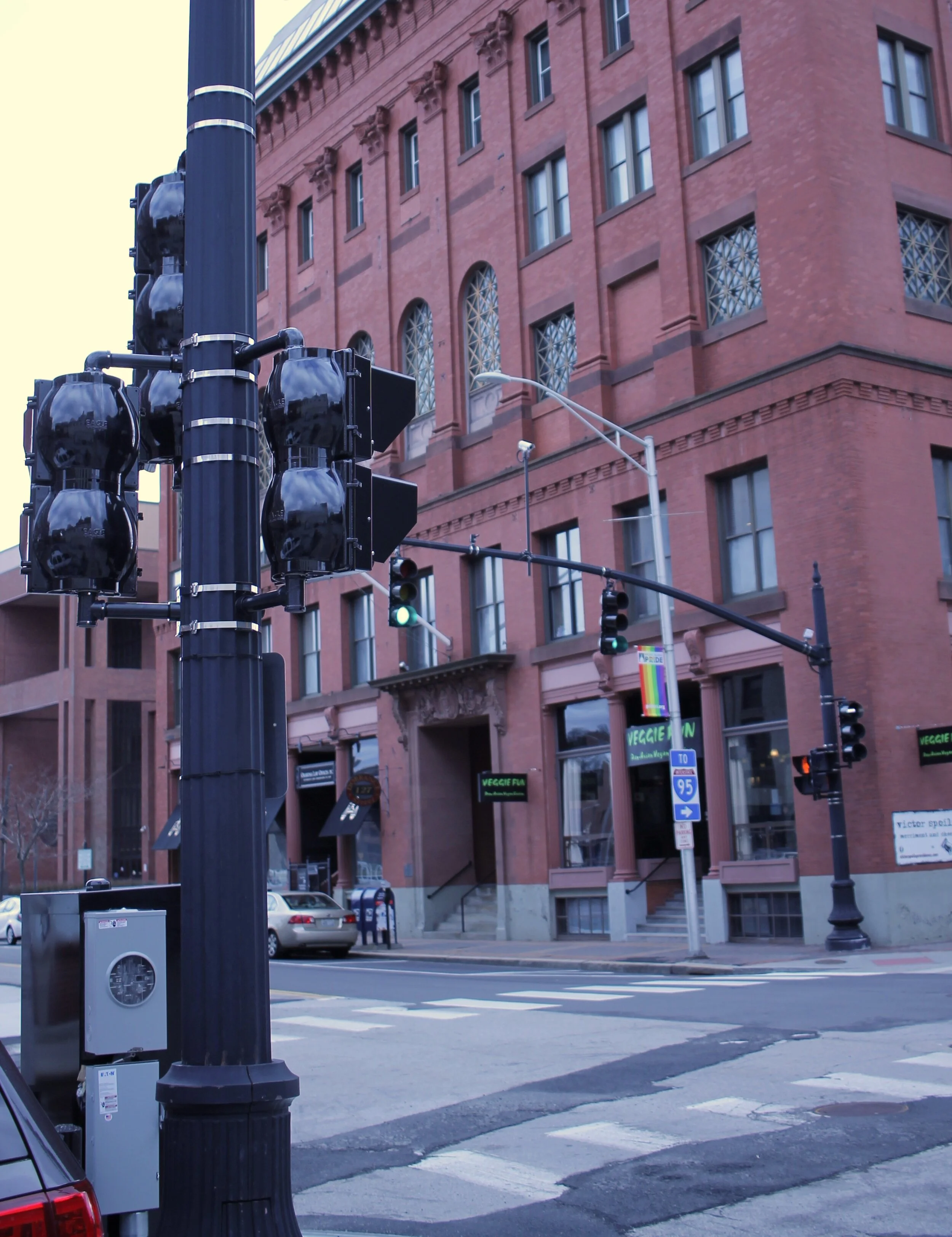
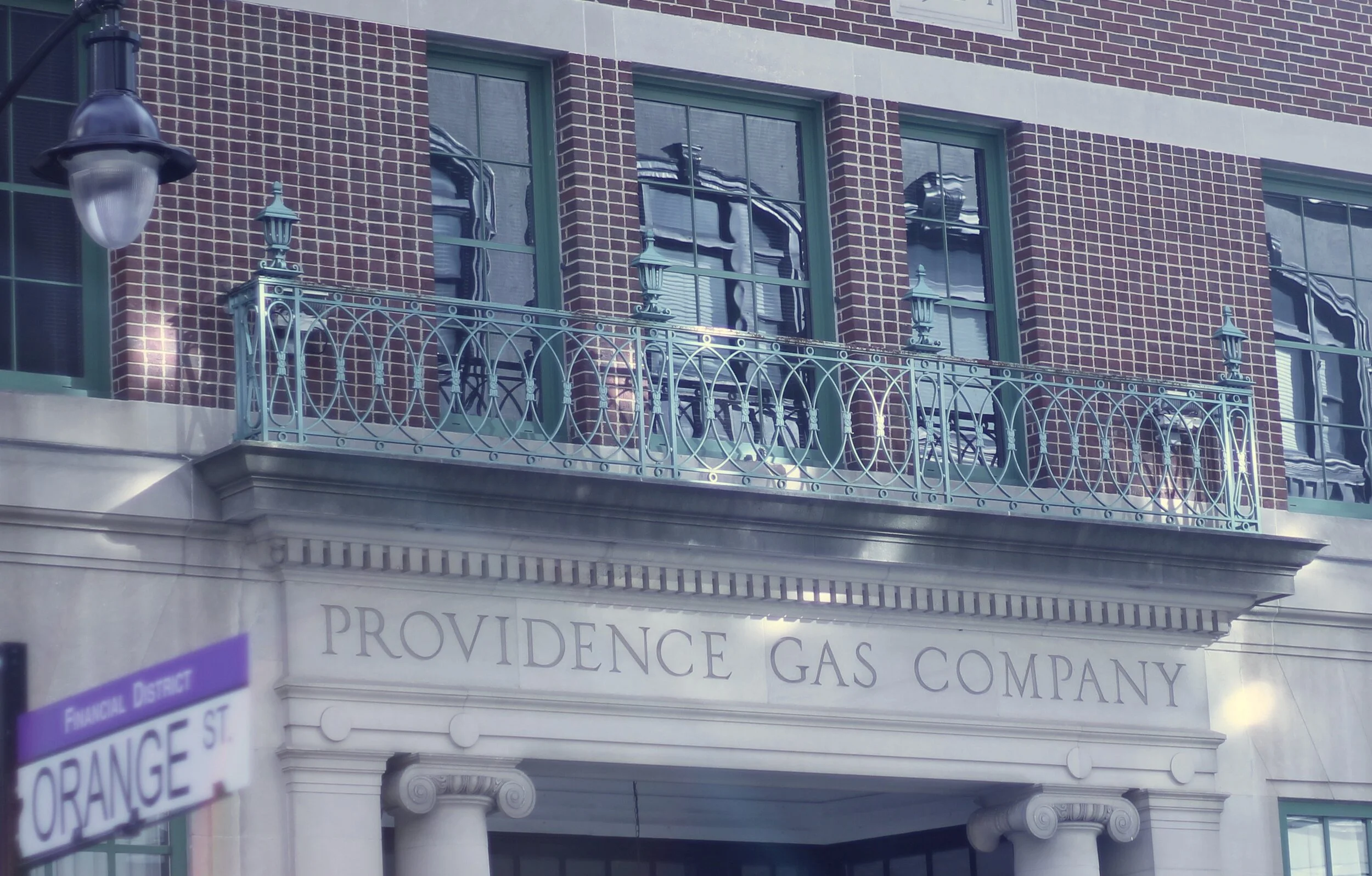
This inspired me to dust off my Rebel T3 and use it. After annoying my family with loads of shutter clicking around the house, today I took a short trip into Providence to wander around a bit and practice using the camera. I brought two prime lenses with me:

  • 24mm/f2.8 pancake lens

  • 50mm/f1.8 lens

Since they are being screwed onto a cropped sensor you have to multiply the focal length by 1.6x (I hear that’s the Canon-specific multiplier) to get the full-frame equivalent (38mm & 80mm respectively). I love the pancake lens and find it easer to compose the shot using its wider field of view. To get better with the 50mm will take me more practice and perhaps a little more thought before I press the shutter.

In my effort to learn more about this neglected camera, I re-read the manual over the holidays and was experimenting mostly just with the aperture and shutter speed. However, a couple days ago I was also adjusting the white balance on the camera because I noticed the AWB wasn’t always giving great results with my low-light indoor shots. Foolishly, I forgot to reset the white balance before I started on today’s journey. When I stopped for lunch with the family, I downloaded all the shots I’d taken onto my iPad (thank you, USB-C) and saw that I had goofed. All the shots had a severe blue hue, so the ones before lunch had to be adjusted. Lesson learned that I should check all my setting before shooting, and I figured out how to adjust the white balance in Apple Photos. Win, win.

Make it Like an Espresso Machine

My company had a great year. A seriously-fantastic, blew-past-our-revenue-targets-in-June, doubled-our-insurance-premiums (‘cause those are tied to revenue lest the insurance companies go hungry) kind of year. I’ve had plenty of the other kind of year, this was way better. It was a ton of effort and everyone had to work some extra hours to meet demand as we were scaling up staff as quickly as prudently possible. Beyond paying the requisite overtime, and giving everyone some pay bumps, I wanted to improve daily life a little bit. We’d all be spending a little more time in the shop, it should be a tad nicer. Now, when I say we had a great year, this isn’t a Silicon-Valley great year. Nobody is lighting cigars with $100 bills here in little Warren, Rhode Island, but we can blow a little cash for a treat. Heck, if you can’t enjoy the good times, what are you going to do during the inevitable bad times? So I bought a few celebratory upgrades to the break room, but my favorite was an espresso machine.

Not everyone in our company drinks coffee, but nearly everyone does, and those of us that enjoy coffee really enjoy coffee. So I wanted to get the best espresso machine and headed over to The Wirecutter to find it. Reading through their typically thorough reviews, it dawned on me that I actually didn’t want the best espresso machine. What I wanted was a reliably very good cup of espresso with as little fuss as possible. I don’t want, nor do I want my co-workers, to learn how to operate an espresso machine to pull the perfect shot. I just want to enjoy my coffee. The ideal machine would be no machine, rather a nice cup o’ joe materializing whenever I got a hankering for some robust, flavorful coffee. So I bought the recommended beginner machine and super-convenient grinder to go with it. It is about as close as you can get to one-button perfection. Stick the basket in the smart grinder, tamp the grinds down a bit, lock it into the espresso machine, press one button and moments later you have a consistently good cup of espresso.

With better machines you can pull a better shot, but you have to be more engaged in the process to operate the machine properly. By contrast, Breville Bambino Plus hides all the complexity behind one button. It obviously doesn’t make the internal process any easier, water still needs to be heated properly and pumped through the grounds at the correct moment, it just hides the complexity and uses software in the machine to do its best to mimic a good barista. You work for me, coffee machine.

This approach mirrors my feelings on designing scenic automation equipment for live entertainment. The products we design at Creative Conners aren’t the best in the sense that they aren’t the most sophisticated or don’t have the most features. Instead, we aim for simplicity. Breathtaking effects are absolutely achievable with Spikemark, but my goal is to make it possible for anyone to get into automation and move stuff. To achieve that goal I sacrifice features to keep the software accessible. The best automation system would be no automation system, where the scenery magically moves the way the designer envisions without any motion controllers, or drives, or rigging, or cue programming. Keep it as minimal as possible, hide the complexity, let us do more coding to keep it simple for the technicians charged with realizing the designer’s intent. That’s the lens I look through when scrutinizing our products.

As I look over the Spikemark UI with that critical eye I see complexity that needs fixing. Over 15 years of development we’ve of course added many features to the software. Those features are great and definitely needed. Projection mapping integration and ad hoc UDP messaging and grouped motion are all fantastic capabilities. But then I look at the Properties Pane for a typical machine and the huge list of parameters that can be adjusted gives me shivers. There’s a lot of numbers to tweak. And who the heck understands it all besides those among us that are anointed automation gurus?

Over the past 15 years, I’ve noted that users have less and less appetite for learning intricate software. I think that’s a good thing. It used to be that every decent sized application required studying and digesting hundreds of pages of instruction manuals. Nobody really wants to do that anymore, including me. Learning to use the software is not the goal. The software is merely the required tool to get to the goal. Our customers want to move stuff on stage. Everything else is a necessary evil, a distraction from their real purpose. Further, the majority of our customers are not full-time automation technicians. Automation is just one small aspect of their job. They are Technical Directors, Stage Carpenters, sometimes even Production Managers or Stage Managers that are trying to get a show up and ready for the audience.

The design of an automation system spans several disciplines, so I use a lot of different software to get my work done. Besides writing C and VB.Net and Python to help develop our software, I also use AutoDesk Fusion360 for mechanical design and EagleCAD for PCB design, and QuickBooks and Excel and Illustrator and... yeah a lot of software. EagleCAD, for example, is a great tool for circuit design and PCB layout, but oh my lord is it a bizarre, funky, unintuitive mess of a UI. I dread opening up that software after it’s been dormant on my hard drive for months, knowing that it will take hours to re-orient myself to the application. So I have sympathy for our customers. Maybe they haven’t opened Spikemark since last year when they loaded-in Christmas Carol and they just want it to work. Make. It. Move. Please. For the love of God. Move. Now!

The coming year promises to be a big year on the software product side for us. We’ve got some big network protocol changes happening under the hood, and some even fancier platform changes that have been months in the making. As we slosh around in the lower layers of Spikemark I’m taking notes on how we could use some of the new plumbing code to simplify the higher levels of the application. Get it all down to one button. Make it like an espresso machine (or as close as possible).

Do you mind talking about your experience with starting your own company?

Starting my company*

The main shop floor at Creative Conners, Inc.

The main shop floor at Creative Conners, Inc.

I joke that if I knew what I was getting into when I filed the incorporation papers in 2004, I wouldn’t have done it. That’s not really true, I’d do it again. The shred of truth in the humorous lie is that I didn’t correctly imagine what I was getting into when I quit my job and started working out of my basement. Now, having met many entrepreneurs, there are those that start a business because they always wanted to run a business, and others that start a business because they are passionate about a thing and can’t find anyone else to pay them to do it (or perhaps want to do it a different way). I fall squarely in the latter category. In college and early in my career, I had some aspirations of building a business, but those were daydream, fantasy-ambitions about starting a fabrication shop because that’s all I knew about at the time, not because I really wanted to build wood and steel boxes for the rest of my life. I started Creative Conners because I couldn’t find anyone else that believed I had a good idea, but I was unjustifiably confident that I could make something special and scenic automation was a passionate interest for me.

(Well... that’s not even the whole story. The company is named Creative Conners rather than something obviously automation-related like: Make It Move, or Scenic Automation Ltd., or Move Stuff On Stage, because I had two passions in those early days. My first fascination was 3D computer animation, automation was my secondary interest. I spent a ludicrous number of hours trying to breath life into 3D models, and still have a handful of amateurish clips on MiniDV tapes to prove it. Somewhere between 2000 and 2004 I had a soul-searching moment when I realized I was not good at animation, and had a better shot leveraging my expertise in automation. I packed up my Lightwave 3D and Hash:AnimationMaster books, and focused solely on coding the Stagehand embedded system and Avista desktop software. Up until that point, Creative Conners could have either been an independent animation studio, or a scenic automation company.)

I spent about 4 years working nights & weekends on the product. I kept my day-job as a project manager, and had just begun to raise a family. Time was scarce, which is most of the reason it took so long to get the first products ready. Well... that and I was learning a bunch of technical stuff along the way.

The prototype of the Stagehand AC in my Providence basement workshop

The prototype of the Stagehand AC in my Providence basement workshop

When it came time to sell the product, I imagined I could keep my day job and sell on the side. As reality set in, I knew the scheme, that I’d convinced myself would work for the preceding 4 years, was untenable. A big part of the job is selling, marketing, and supporting the product line. In fact, that’s most of the job. Those activities can’t be done part-time and still be considerate to the customer. So, my wife (who is very supportive) and I decided that we should refinance our house (2 young kids at the time, no second income) and use the money to get the business started. I remember my father pleading with me on the phone, as I drove to work intending to quit, not to leave my steady job and ruin my young family’s financial situation. Undeterred, I gave myself 6 months to make the first significant sale, and if it didn’t happen by then I’d go get a jobby job again.

It took about 5.5 months to land the first sale. The money was scary-tight, but that was a good test of my pain threshold and a precursor of the most common challenge I’ve dealt with daily/weekly over the past 15 years. It takes a long time to market a new product and make a sale. I greatly underestimated the waiting. A six-month pipeline, if the product is any good, from first marketing launch to first sale isn’t outrageous in our niche market. To this day, we have to anticipate at least that much lead time when we introduce a product. If sales aren’t significant after a year, it’s a pretty good indication we made a dud. When I am proud of my work, I have a childish belief that the world should recognize how cool my latest creation is and come fawn over it. Of course, few customers really cared that much, and sometimes the creation kinda stunk, and much of the time people didn’t know about it because I hadn’t done a good job promoting the product. (These days the company does a better job because we have talented people focused on promotion).

The thing I wish I had known before starting out is how little time is spent doing the thing I love (automation), and how much time is spent initially selling and marketing when the company is micro-sized, then later managing people and money when the company is a little bigger. Most of what I do day-to-day now is management. I don’t hate it, but I wouldn’t choose it in a Craiglist job posting. The job isn’t “making automation”, it’s “making a company, that makes automation”. It requires a lot of communication, cheerleading, and directing. Those are very different tasks, and I’m not inherently good at any of them: I’m introspective, prickly, and require the admiration of others to stay motivated. Knowing those personal faults, I actively try to work around them; sometimes, I even succeed.

On the positive side, I also don’t particularly like doing the same thing day-in, day-out. I enjoy problem solving. I enjoy experimentation. I like marketing. All of those things are needed to run a small business. I wish I had more focused time for the technical stuff, but to serve our customers well it is more effective to hire people to focus on that while I meet with lawyers, bankers, marketing people, work on growing the company, and handle the never-ending personnel requests and issues that come up. In fact, here’s another one that just popped up. Gotta run!

*This was originally an email response, to the question posed by a student.